


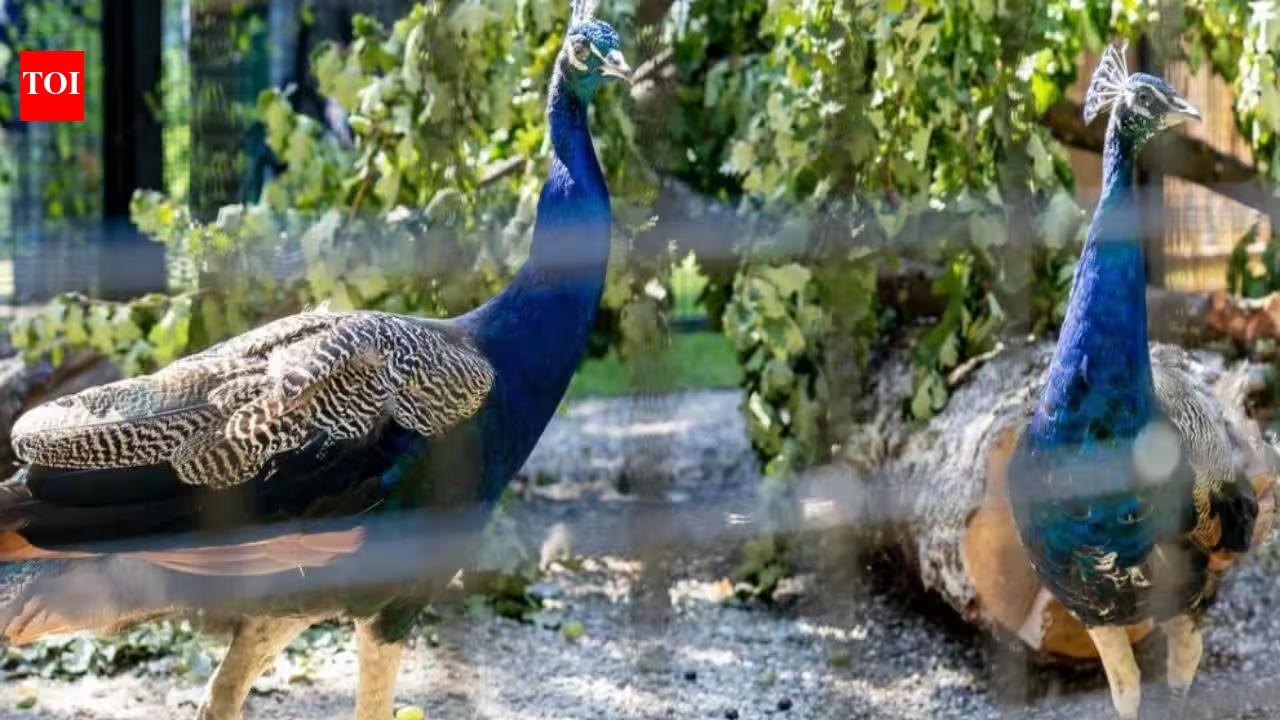
India has brought a little bit of Indian touch to the grounds of the United Nations Office at Geneva. The country has donated five Indian peacocks, including a rare white-feathered male to the UN. The birds were formally handed over during a special ceremony on Friday. With this, India revived a decades-old tradition. The birds were presented by India’s Permanent Representative to the UN in Geneva, Arindam Bagchi. He gave the five birds to UNOG Director-General Tatiana Valovaya.What did the present consistsThe group consists of four blue Indian peafowl and one white-feathered male. Their blue-and-white appearance also echoes the colours associated with the United Nations. It was actually a symbolic gesture.A tradition that goes back decades
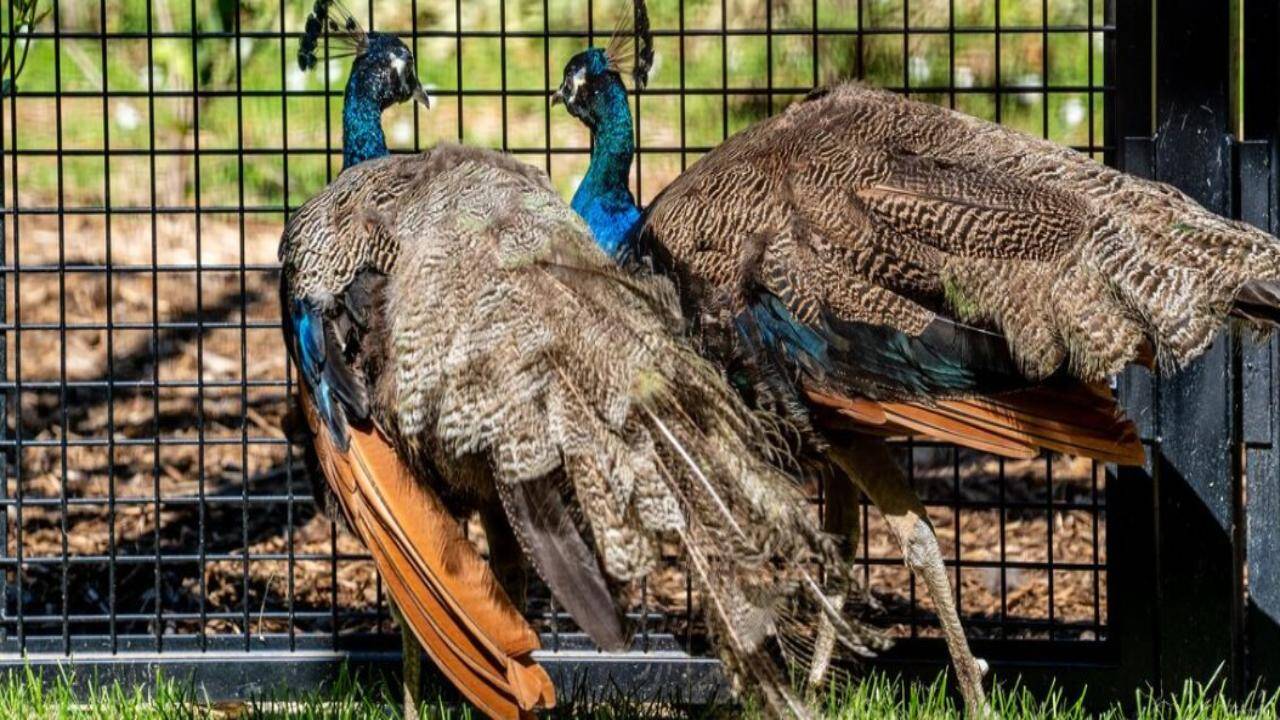
Peacocks in UN Geneva (UN Photo/Elma Okic)
It’s a cultural gesture. It revives an earlier Indian tradition of presenting peacocks to the UN Office at Geneva. As per reports on the latest handover, former Prime Minister Indira Gandhi had donated peacocks to the organisation in 1981.The return of the birds is particularly fitting because peacocks have long been associated with the grounds of the Palais des Nations. Ariana Park, the green space surrounding the UN complex, is known for its mature trees, plants and resident peacocks.In an April 2026 address, UNOG Director-General Tatiana Valovaya herself referred to the park’s famous peacocks while highlighting the natural environment around the Palais des Nations.What it means for travellersFor travellers visiting Geneva, Ariana Park therefore offers an unusual contrast to the city’s better-known attractions. The area around the Palais des Nations combines international diplomacy with gardens and open green spaces, making it one of Geneva’s more distinctive places to experience the city.White peacock, the star
Peacock (Canva)
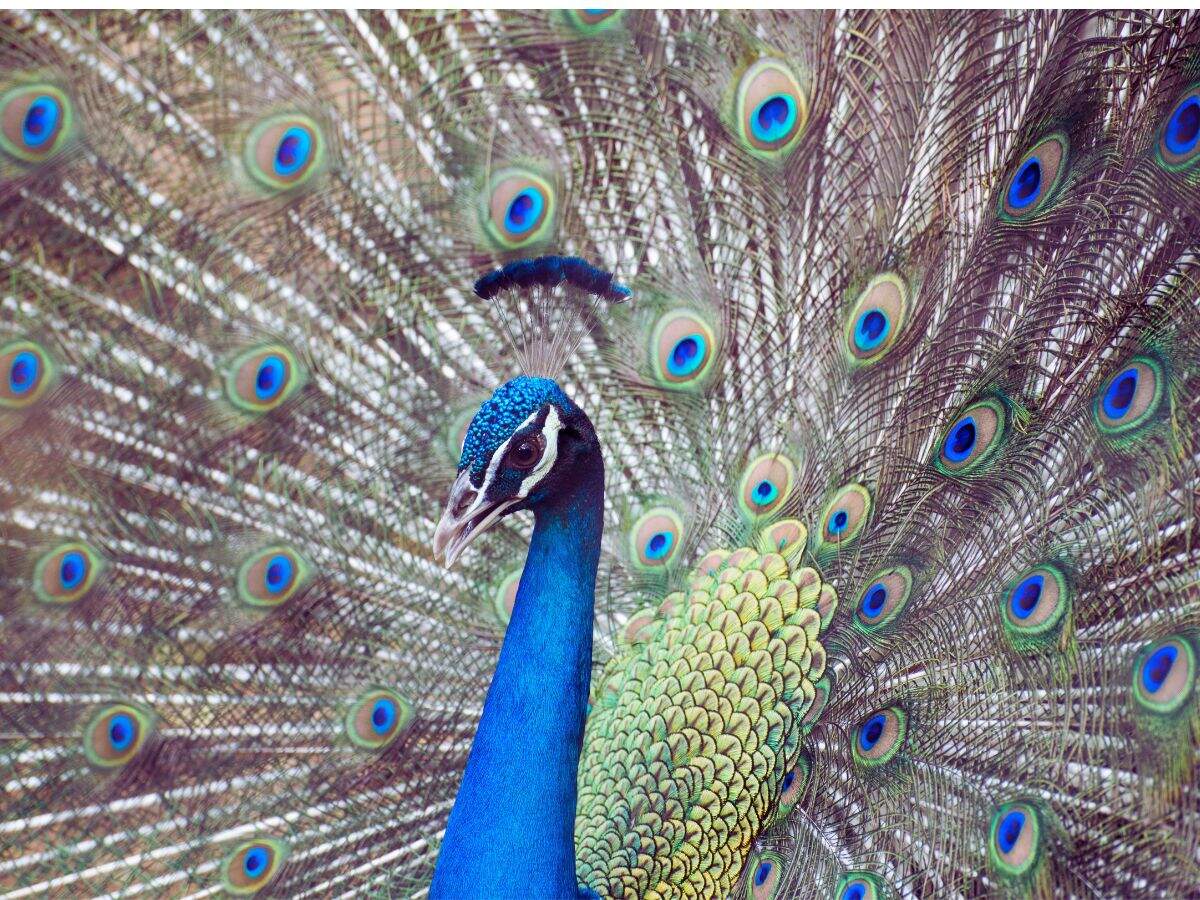
The star of the show is the white-feathered male. It is an unusual colour form of the Indian peafowl, scientifically known as Pavo cristatus. The Indian peafowl is instantly recognisable for its spectacular train of elongated upper-tail covert feathers, which display the familiar eye-like patterns.A condition caused by leucismThe India Biodiversity Portal specifically records a leucistic form of Pavo cristatus, alongside the familiar blue peafowl. Leucism is a genetic condition that reduces pigmentation in feathers. It produces an unusually pale or white appearance. Unlike albinism, it does not necessarily mean that the animal completely lacks pigment throughout its body.A symbol that represents India
UN Geneva (UN Photo/Elma Okic)
The peacock is also India’s national bird. The Indian peafowl is found across much of the country, inhabiting environments ranging from deciduous forests and scrublands to areas close to villages and cultivated landscapes.For international visitors, the bird is more than an attractive wildlife sighting. Its elaborate plumage, traditional cultural associations and status as India’s national bird make it a powerful representation of the country’s biodiversity.What travellers can see in Geneva
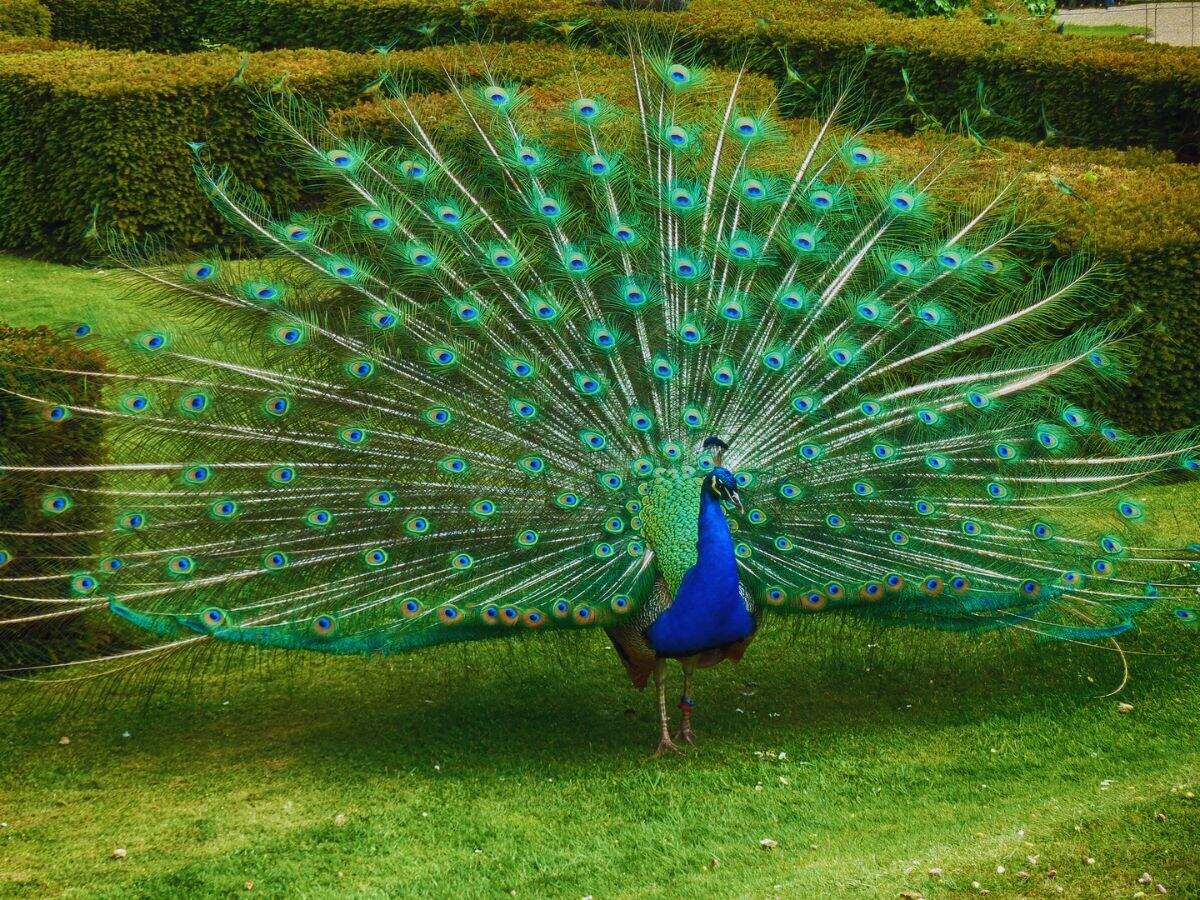
Indian Peacock (Canva)
The Palais des Nations is one of Geneva’s most recognisable landmarks and an important destination for travellers interested in history and architecture. It houses the United Nations Office at Geneva and is located close to the city’s international district.The surrounding Ariana Park adds a quieter, greener dimension to the visit. The park’s trees, gardens and wildlife provide a striking backdrop to the imposing international complex. The presence of peacocks has itself become part of the character of the grounds; UNOG has described them as among the park’s familiar features.The arrival of the five new Indian birds therefore connects two very different forms of heritage: Geneva’s role as a centre of international diplomacy and India’s long association with the peacock as a symbol of nature and culture.For travellers, it also creates an unusual wildlife encounter in the middle of one of Europe’s most important diplomatic cities.