


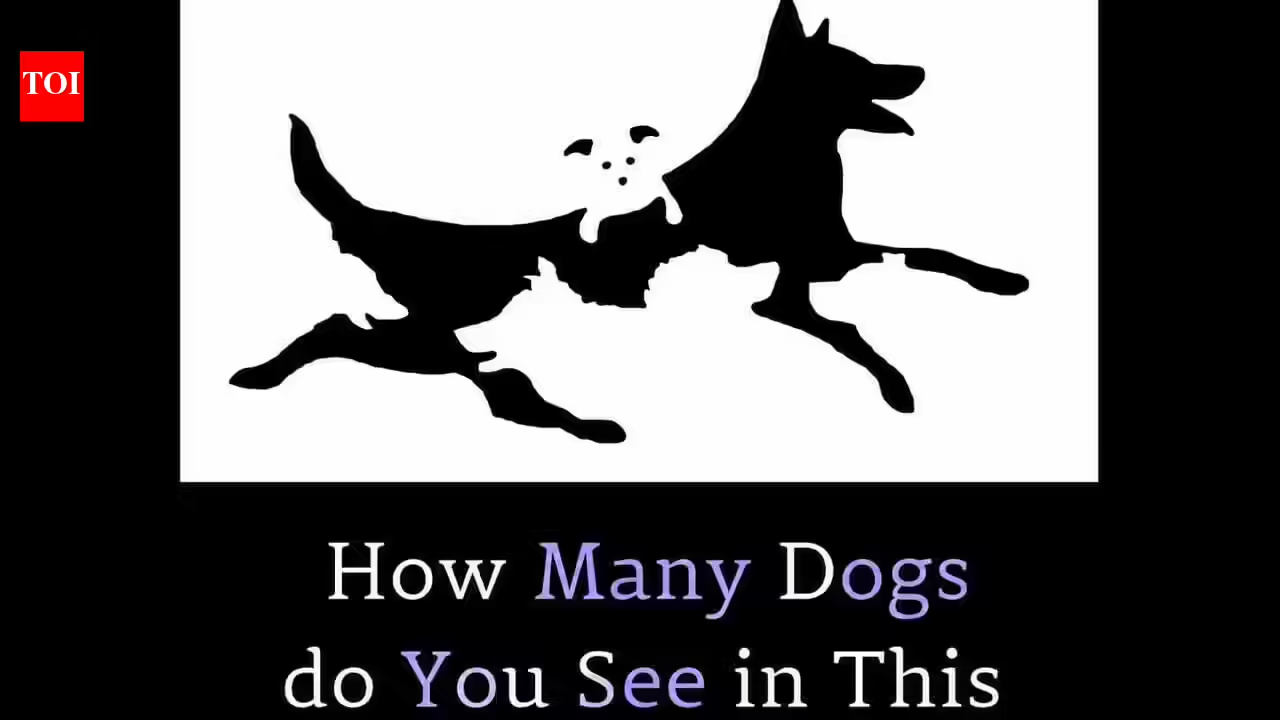
Optical illusions never seem to get old; one after another, the simplest pictures transform into a hard visual task for internet users. One of the puzzles that went viral is the one testing people’s visual perception. At a first glance, the illustration seems easy to comprehend; the closer one looks, the more hidden dogs you discover. The task seems to be quite simple – to count all the dogs in the picture. Still, most people cannot solve it at once and wonder about the result they get.
What is hiding in plain sight?
The illusion aims to deceive the brain into perceiving fewer dogs than there actually are in the picture. All the bigger and more noticeable animals are easily discovered by viewers; however, the hidden ones take some effort to discover. Some of the dogs are cleverly made using outlines, shadows, and overlaps. As the brain naturally tends to pay attention to prominent objects, the smaller ones tend to go unnoticed at first.
How do optical illusions work ?
The main principle of optical illusions is that the brain tends to simplify any visual information it perceives. It means that instead of analysing everything in detail, it seeks patterns and tries to make shortcuts. Although such a process makes our life much easier to perceive, it might deceive us when we deal with a specially designed puzzle. The repeating shapes and lines force the brain to group objects into clusters, making it hard to discover some of them.
Is your observation skill tested, not intelligence
There is a common belief that solving optical illusions proves one’s intelligence. However, scientists often argue that these challenges test people’s visual perception and patience. Solving an illusion often depends on how detailed the person examines the illustration, rather than how fast his/her brain works. For instance, some people can instantly spot hidden figures, while others perform better when they slow down.
Change your approach
If you find it hard to spot every dog hidden in the illusion, experts recommend to change the approach and examine the illustration differently. You need to divide the picture into smaller parts and examine each one carefully. The systematic scanning left-to-right or top-to-bottom will allow to avoid focusing your gaze on the same elements again and again. Many people discover hidden figures after they slowed down and approach the problem methodically.
Why do such challenges become popular
People love visual puzzles due to their entertaining and competitive nature. The social media encourages them to show their results and compare them with other people. The illusion that can prove someone’s sharp eyesight or high level of observation skill is likely to become popular as people want to know how they cope with it. The joy of finally discovering a hidden object after several attempts also adds to its popularity.
Advantages of brain teasers
Though these puzzles do not have any scientific value and are created solely for amusement, they can develop concentration and visual perception. Looking for hidden objects forces the brain to pay attention to details, patterns, and spatial relationships. Even though these challenges are not any scientific tests of eyesight or intelligence, they still provide an interesting mental activity during a short pause.
Did you find every hidden dog?
Congratulations if you discovered all the hidden dogs in the illustration. However, if not, do not worry; there are many other people who were unable to cope with the task. The illusion managed to deceive many people by hiding animals in the picture.